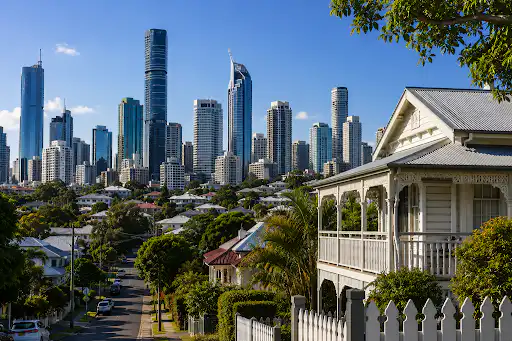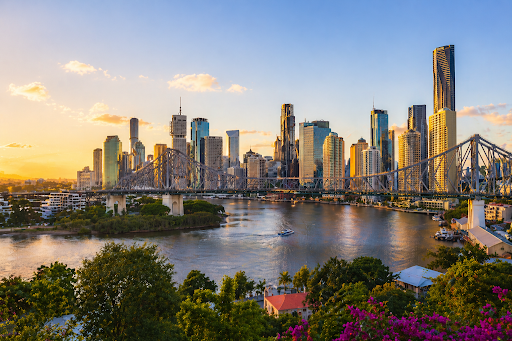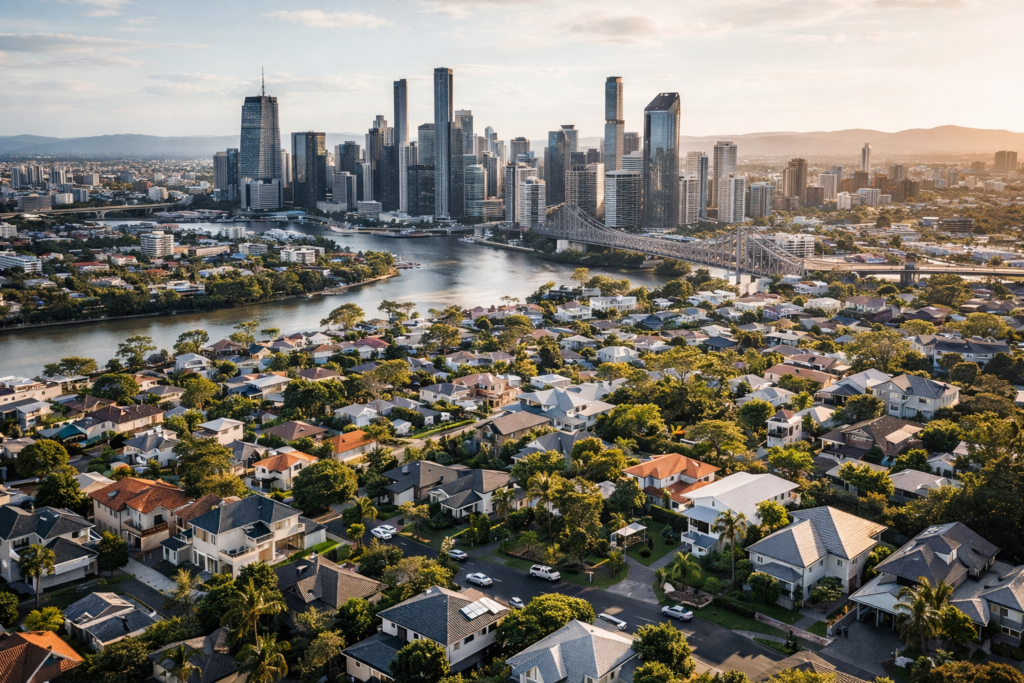

Brisbane’s property market has entered a new phase.
After several years of intense competition, rapid price growth and limited buying opportunities, the balance is beginning to shift. Brisbane property values remain significantly higher than they were a year ago, but momentum has slowed, stock levels have increased and buyers are gaining more time and more leverage to make considered decisions.
This is not necessarily a falling market. It is a market becoming more selective.
For buyers, that distinction matters.
Brisbane Property Prices Remain Strong, but Growth Is Slowing
Depending on the index used, Brisbane recorded either modest growth or a small decline during June 2026.
Cotality data showed Brisbane dwelling values increasing by approximately 0.3% for the month, while PropTrack recorded a 0.2% monthly decline. The difference reflects the separate methodologies and property datasets used by each provider, rather than one result being inherently incorrect.
Despite the variation in the monthly figures, the broader trend is clear: Brisbane remains substantially more expensive than it was 12 months ago, but the extraordinary pace of growth has eased.
Cotality data placed Brisbane’s annual dwelling-value growth at approximately 17.4%, while PropTrack reported annual price growth of 13.9%. Both measures still position Brisbane among Australia’s strongest-performing capital-city markets.
This means buyers should not interpret the current slowdown as evidence that every property is suddenly available at a discount. Quality homes in desirable locations can still attract strong competition. However, the market is no longer moving uniformly upward at the pace experienced through the previous growth cycle.
Brisbane Units Are Outperforming Houses
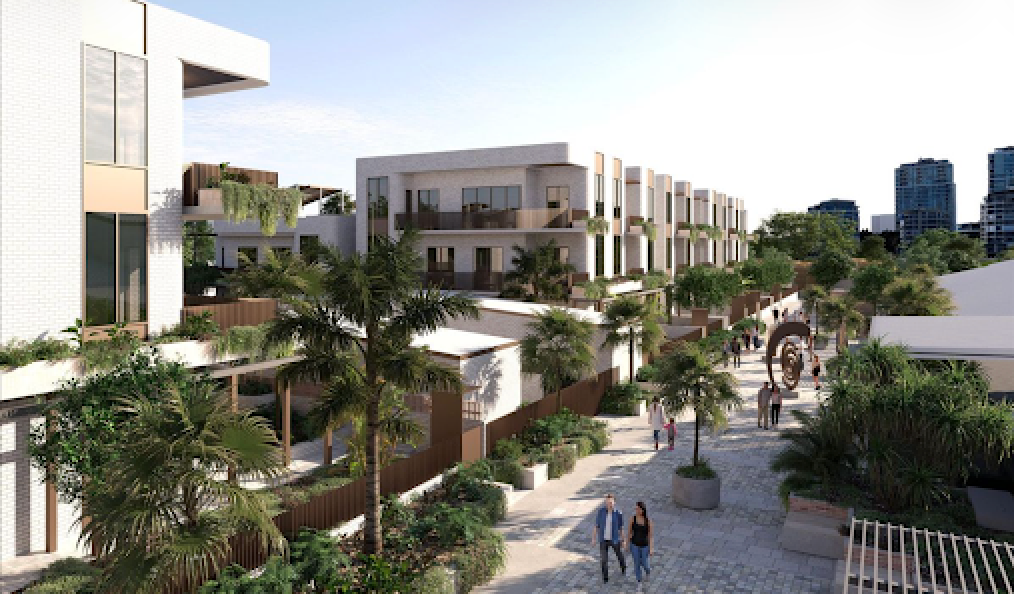
One of the most significant trends in the Brisbane market is the strength of the unit sector.
According to Cotality data reported for June 2026:
- Brisbane house values increased approximately 16.8% annually.
- Brisbane unit values increased approximately 20.3% annually.
- The median house value was approximately $1.225 million.
- The median unit value was approximately $885,000.
The Real Estate Institute of Queensland also recorded strong apartment performance during the March 2026 quarter, with Brisbane’s median unit sale price increasing by 6.67% over the quarter to $880,000.
Units are benefiting from several overlapping forces.
House prices have moved beyond the borrowing capacity of many first-home buyers, downsizers and investors. Well-located apartments provide a more accessible entry point, particularly in suburbs offering transport, dining, employment and lifestyle amenity.
However, strong citywide unit growth does not mean every apartment is a sound investment.
Buyers must still consider:
- Body corporate financial health
- Upcoming capital expenditure
- Building defects and insurance
- Owner-occupier versus investor ratios
- Floor plan and natural light
- Road, rail and aircraft noise
- Aspect, privacy and outlook
- Car accommodation
- Supply of comparable apartments
- Price per square metre
The gap between an excellent apartment and an average one can become very apparent when the market eventually normalises.
More Properties Are Available to Buyers
Another important change is the increase in advertised stock.
Cotality data showed that the number of Brisbane properties listed for sale over a recent four-week period was almost 25% higher than at the same time the previous year. New listings were only marginally higher, indicating that the increase in total stock was largely caused by properties taking longer to sell.
This is meaningful for buyers.
During a rapidly rising sellers’ market, properties often sell during the first campaign, sometimes before buyers have completed their due diligence. When listings remain available for longer, buyers gain:
- More choice
- Greater time to complete research
- Better access to comparable sales
- Increased negotiating power
- Greater opportunity to impose appropriate conditions
- Less pressure to make an emotional decision
Some vendors will adjust quickly to changing conditions. Others will remain anchored to prices achieved during the strongest part of the market.
This creates opportunity—but only when a buyer can identify the difference between a genuinely motivated seller and an owner who is simply testing the market.
Buyers Have More Negotiating Power
Open-home attendance has fallen sharply across Brisbane, with recent Ray White analysis reportedly showing average attendance declining by 59% year-on-year to approximately 2.8 people per inspection.
Lower attendance does not automatically mean a property is undesirable. It may reflect reduced borrowing capacity, buyer uncertainty, unrealistic pricing or simply a broader decline in urgency.
The key change is that buyers are increasingly able to pause, analyse and negotiate.
This creates more scope to:
- Challenge an inflated asking price
- Negotiate before auction
- Revisit properties passed in at auction
- Target campaigns that have exceeded normal days on market
- Secure favourable settlement terms
- Include appropriate finance and due-diligence conditions
- Approach off-market owners without competing against a full campaign
Negotiating well in this market requires more than making a low offer. The offer must be supported by evidence, structured strategically and presented in a way that addresses the seller’s priorities.
Price is only one component of an offer. Deposit, settlement timing, conditions and certainty can all influence the outcome.
Affordability Is Now Restricting Demand
Brisbane’s growth has created a significant affordability challenge.
Higher property values, combined with elevated interest rates, have reduced borrowing capacity and increased the income required to service a mortgage. Research based on Cotality data estimated that the household income required to purchase a median Brisbane house increased by more than $17,000 in four months, based on specified lending assumptions.
This is contributing to several changes in buyer behaviour:
- Greater demand for units and townhouses
- More buyers considering middle-ring and outer-ring suburbs
- Stronger focus on properties requiring minimal immediate expenditure
- Increased importance of dual incomes and family assistance
- Lower tolerance for compromised or overpriced properties
- More buyers purchasing below their maximum borrowing capacity
Affordability pressure does not affect every section of the market equally.
Entry-level and well-located mid-market properties may still attract considerable interest because they align with the largest pool of active buyers. Higher-value properties, inferior apartments and heavily compromised homes may require longer campaigns and greater vendor flexibility.
Population Growth Continues to Support Brisbane
The underlying demand for housing remains supported by Queensland’s population growth.
Queensland’s estimated resident population reached approximately 5.71 million people at 31 December 2025, representing 20.5% of Australia’s population.
Population growth does not guarantee that every suburb or property type will appreciate at the same rate. However, sustained migration increases the need for housing, infrastructure, employment centres and rental accommodation.
Over the longer term, Brisbane’s comparative affordability against Sydney, employment base, lifestyle appeal and major infrastructure program remain relevant demand drivers.
The challenge is that population growth alone should never be used to justify paying any price for any property.
A growing city can still contain:
- Oversupplied apartment pockets
- Poorly constructed buildings
- Flood-affected properties
- Inferior locations
- High body corporate liabilities
- Properties with limited resale appeal
- Areas where infrastructure has not kept pace with development
The strongest long-term acquisitions are generally those that combine broader market demand with scarcity at the individual property level.
What Brisbane Buyers Should Do Now
The current market rewards preparation and property selection.
1. Secure finance before becoming emotionally invested
Know your borrowing capacity, preferred repayment level and maximum purchase price before entering negotiations.
A bank’s maximum approval should not automatically become your personal budget.
2. Analyse the individual property, not just the suburb
Two properties in the same street can perform very differently.
Consider land usability, flood exposure, orientation, floor plan, renovation quality, privacy, noise, future development and resale appeal.
For apartments, review the body corporate records and compare the property with recent sales inside the same building.
3. Question the quoted price
Agent price guides are marketing tools, not independent valuations.
Use settled comparable sales, not asking prices or current listings, to establish fair value.
4. Look for seller motivation
Extended days on market, failed contracts, auction pass-ins, vacant properties and changing campaign language can all reveal opportunities.
However, motivation should be confirmed through careful agent conversations rather than assumed.
5. Avoid overpaying for presentation
Buyers often pay a significant premium for styling, furniture and cosmetic finishes.
Separate the permanent value of the property land, position, layout and aspect from temporary presentation.
6. Maintain a walk-away price
The strongest negotiating position comes from being prepared to miss a property.
A buyer who becomes emotionally committed before negotiations begin is more likely to overpay or overlook material risks.
Is Now a Good Time to Buy in Brisbane?
For the right buyer and the right property, the emerging conditions may provide a more favourable purchasing environment than Brisbane has offered for several years.
Prices remain elevated and affordability remains challenging, but buyers generally have more stock to choose from, less urgency and stronger scope to negotiate. The market has moved away from indiscriminate growth and toward a more balanced environment in which property quality and pricing discipline matter.
The objective should not be to perfectly time the bottom of the market.
The objective is to secure a high-quality property, in the right location, at a price supported by evidence and to hold it for an appropriate period.
Brisbane is not one property market. Conditions vary considerably between houses and apartments, price brackets, school catchments, flood zones and individual buildings.
The opportunities are there, but they will not always be obvious.
Search. Negotiate. Secured.
At Secured Buyers Agency, we combine extensive Brisbane real estate experience with detailed property research and strategic negotiation.
We help buyers identify the right opportunity, complete comprehensive due diligence and secure property without being driven by emotion or selling-agent pressure.
Because purchasing well is not simply about finding a property.
It is about understanding what it is worth, recognising its risks and securing it on the right terms.